Between Summits and Storytime (DRAFT)
Between Summits and Storytime
How the mountains taught me awe, injury taught me restraint, and fatherhood taught me presence.
In about a year, I’ll be heading off on a big trip to Argentina, and I’ll admit: I’m a chronic daydreamer.
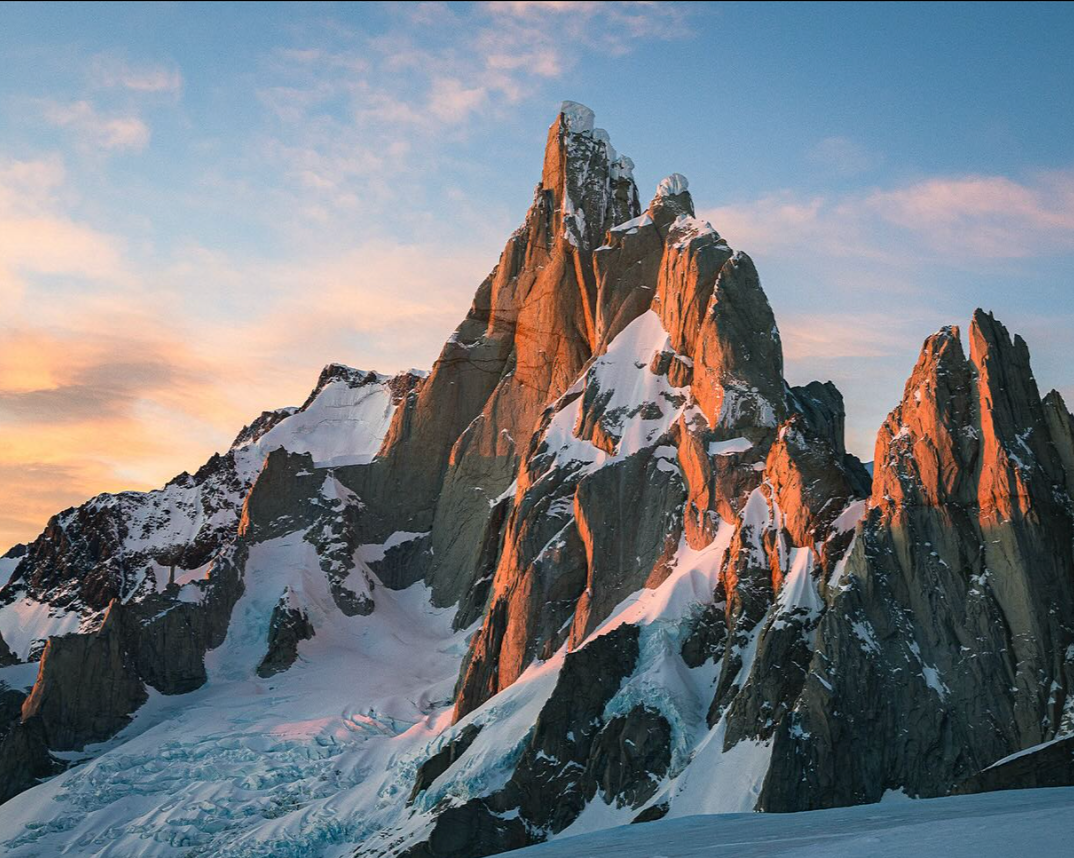
On my morning commute or between meetings, my mind drifts south—toward Patagonian dawns, radical lines painted pink by first light, granite towers burning orange. I imagine laughing with strangers from all over the world, stumbling through half-decent Spanish over a plate of asado, swapping stories about the bad ass couloir we just skied.
But just as vivid are the scenes at home.My youngest daughter, Lily,learning to crawl, her face glowing with a mixture of determination and delight. My older daughter, Tatum stumbling into the kitchen, hair tangled from sleep, eyes half-closed being rubbed by her little hands, whispering “I want some waffles.” My youngest laughs so hard her whole body shakes when I toss her in the air. Sometimes they both dissolve into belly laughs at once—chaotic, unfiltered, fleeting. Like a powder day, you can’t capture it; you can only be there when it happens. These are the moments that rival any summit, fleeting and perfect in their own right. One moment I’m lost in Patagonia; the next I’m scooping them up, feeling a rush no day in the backcountry could ever match.
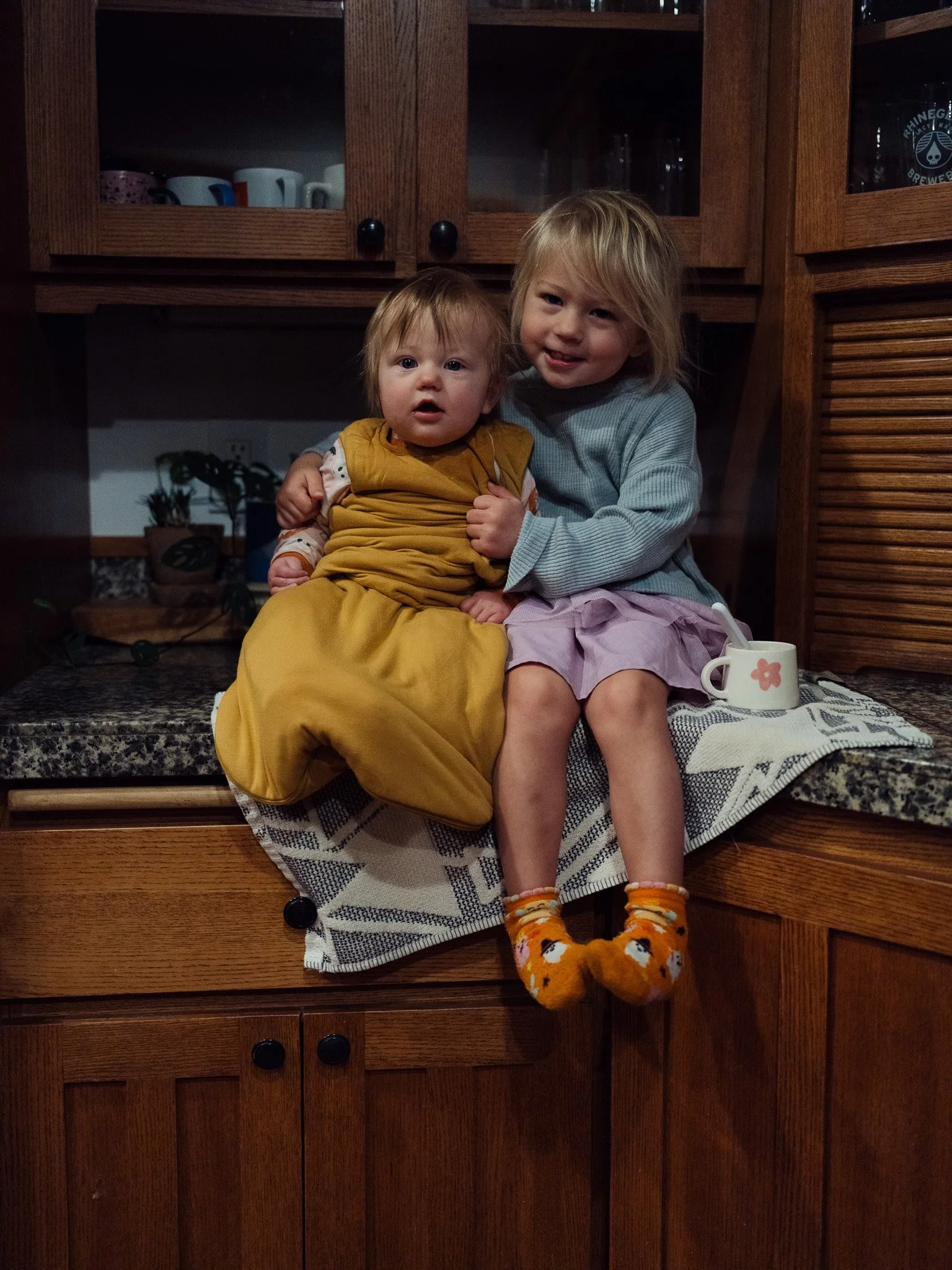
That’s where the tension lives now—the space between summits and storytime.
Between the person I’ve been for years—driven, mountain-minded, progression-oriented—and the father I’m learning to become.
And that tension invites a real question:
Is it selfish to pursue trips like this while my daughters are so young?
I know I’m no Renan Ozturk or Conrad Anker.
I’m not grinding through a months-long siege on Meru or attempting the first traverse of the Moose’s Tooth. But even a week in Argentina—or a long weekend in the Cascades—demands training, money, sacrifice, and most importantly, time.
Childhood is fleeting in a way no one adequately warns you about. And when I’m away, my wife carries the weight alone—toddlers, dogs, schedules, meltdowns, the wild ride of family life. The risks aren’t just avalanches or injuries anymore.
The risk is absence.
Yet, the pull of the mountains has shaped almost every chapter of who I am since my young adulthood.
I didn’t grow up in the mountains. I grew up in the Midwest, where the wildest things I saw were thunderstorms rolling across flat horizons. Most people I knew lived for football games, yard work, and a week in Florida spent mostly reading on the beach.
Everything shifted the summer I moved to Jackson Hole to guide and spend long weeks in the backcountry. Climbing the Grand was like climbing out of one life and into another. The twenty- and thirty-day backpacking trips cracked something open inside me. That summer I promised myself I would never return to the flat version of life I’d left behind. I wanted a life centered around wild places. I wanted a life living wild in those places.
For years, that’s exactly what I built. I became a wilderness therapy instructor—eight days outside, six days off. I slept under stars more often than I slept under ceilings. On my days off, I climbed, biked, and explored that beautiful desert of southwest Utah. When I eventually moved to Oregon, I built my schedule around morning laps at the resort and midweek backcountry missions. My community formed around the people who lived the same way—people whose calendars revolved around weather patterns, not weekends.
As my identity deepened into the outdoors I began to develop a desire for Progression.
In skiing, it was bigger lines, more technical terrain, trying 360s, backflips, and descending steeper couloirs.
In mountain biking, it was hitting bigger jumps, riding faster, linking small tricks.
The unspoken standard was simple: if you weren’t pushing, you weren’t progressing.
But progression comes with a price.
The injuries began to accumulate—concussions, broken arms, chipped teeth. At first, each one felt like bad luck. Then like carelessness. Then like a pattern. Soon I found myself dealing with symptoms from smaller and smaller falls. Somewhere along the line of progression, I’d become jaded to consequence. Big terrain and big jumps meant more fun, but they also meant bigger margins for error—and bigger costs when things went wrong.
The last major concussion happened on a jump I knew well, one I’d hit countless times. A forty-foot tabletop, familiar and predictable. I came in a little fast, made one small mistake, and that was enough. I broke a full-face helmet. I broke teeth. And I rattled my brain hard enough that the world didn’t sound or feel quite right for months afterward.
That was the injury that changed the trajectory.
Not because it hurt more—but because of what it revealed. After that crash, even small falls brought symptoms back: the ringing, the fog, the dizziness, the fear that I wasn’t going to get away with this for forever. Fear that I could lose access to the world I’d come to love. Worse, fear that I could lose access to myself—my clarity, my presence, the way I moved through the life I’d built.
The worst part wasn’t physical pain.
It was the echo the injury left behind—the lingering fog, the static, the sense that my mind wasn’t quite landing where it used to.
For nearly a year, I didn’t feel like myself. Foggy. Irritable. Unsettled. It felt like trying to tune a radio with a blown speaker—you can recognize the song, but it never comes through clean.
That’s when I found myself reaching for a camera. At first, it was practical: an external hard drive for the memories I worried my brain wouldn’t reliably store. The glow of an alpine morning, friends laughing at a trailhead, the way powder bursts in the air on a good turn. But photography became more than insurance. It gave me another form of progression—one that didn’t depend on danger.
Instead of chasing the next biggest line, I started chasing moments. Not to conquer them, but to notice them. To frame them. To learn how to relish moments without needing the day to be radical.
Injury didn’t just slow me down; it redirected me. It taught me restraint, showed me how to orient towards not only what I could do, but what I could witness. It gave me a way to still belong to the community I love, but with a different pace, a different eye.
Photography became a refuge. A way to stay connected. A way to remain awake to my life even as parts of me felt shaken. And it primed me for the next chapter in a way I didn’t yet understand.
A few years later, I found out I was going to be a dad.
Three days after learning the news, I went dirt biking with friends. It was too early to share the secret, so I held it quietly. At the time, I thought I was holding a pregnancy. But in hindsight, I was holding the beginning of a shift, a new orientation I didn't yet have words for.
That afternoon, one of the guys climbed a hill no one else had cleared. I knew I could do it too. I felt the old dog bark inside me—the part of me that still wanted to prove I was the real deal, still capable, still progressing, still in it.
But instead of gunning it, I paused.
Then laughed softly.
Not mockingly—tenderly.
A calm I’d never felt in moments like that washed over me.
I knew I could climb the hill.
I just didn’t need to.
Something bigger had started to take root.
Before our second daughter was born, I flew into a remote Alaskan glacier with friends. We loaded skis and gear into a bush plane and watched the pilot disappear over a ridge, leaving us in a bowl of silence. The skiing was everything I’d hoped for—steep, wild, remote.
But in the quiet hours—when the wind died and the tent settled—I felt something else. Something heavy.
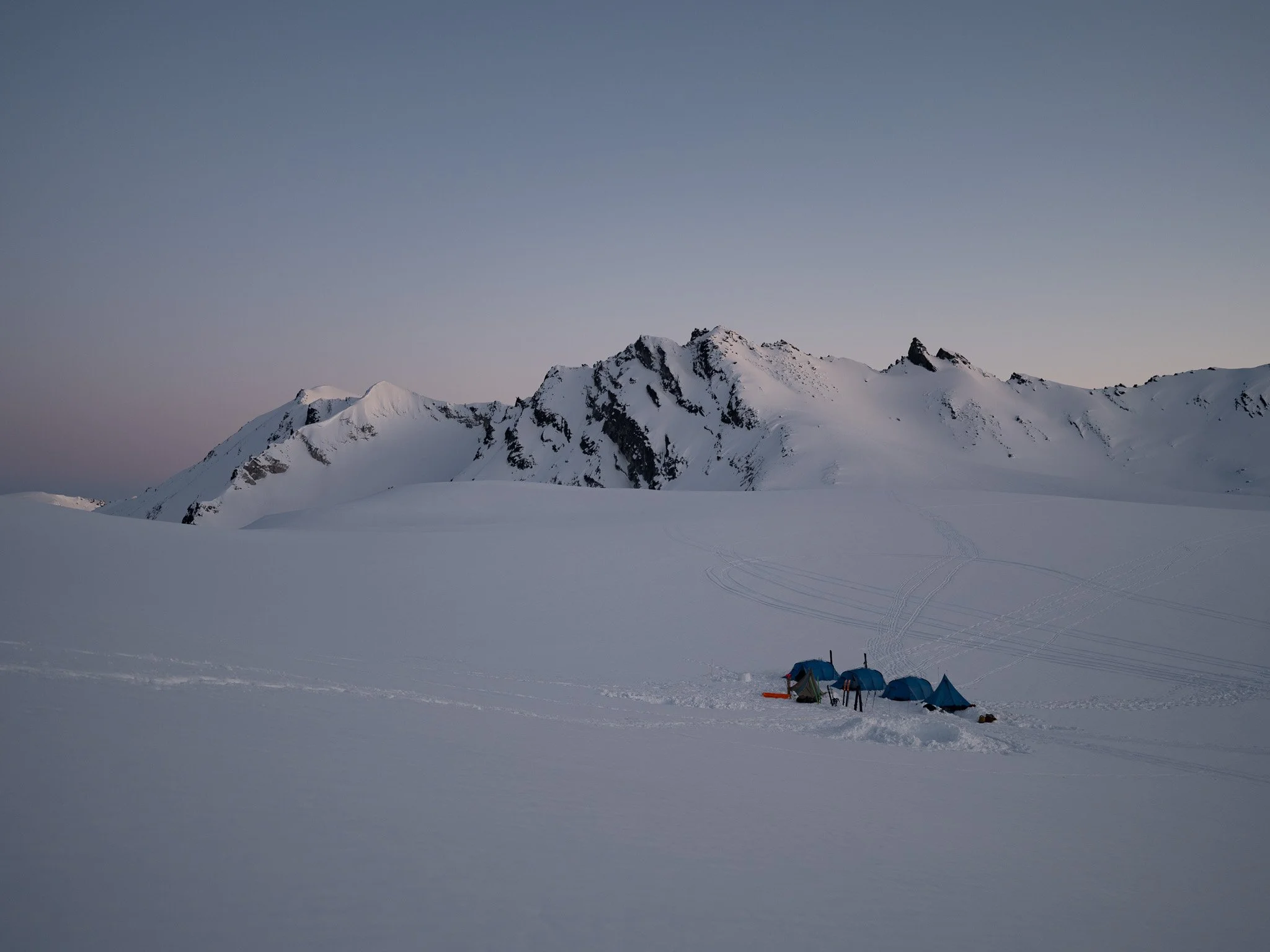
I had chosen to be there.
And choosing to be in the mountains meant choosing not to be with my daughter.
For the first time, the risk wasn’t physical injury.
It was emotional distance.
The risk wasn’t a fall line.
It was absence.
Injury had already taught me to think about longevity, about preserving the person who moves through the world. But Alaska forced a harder question:
What is the cost of being gone during the years my daughters need me most?
People say you get eighteen years with your kids. But the shift comes earlier—eight, ten, maybe thirteen. Their orbit widens. The magic of dependence fades quicker than anyone warns you.
So the new progression wasn’t about steeper lines.
It was about evaluating a different kind of risk:
Is the reward of adventure worth the cost of absence?
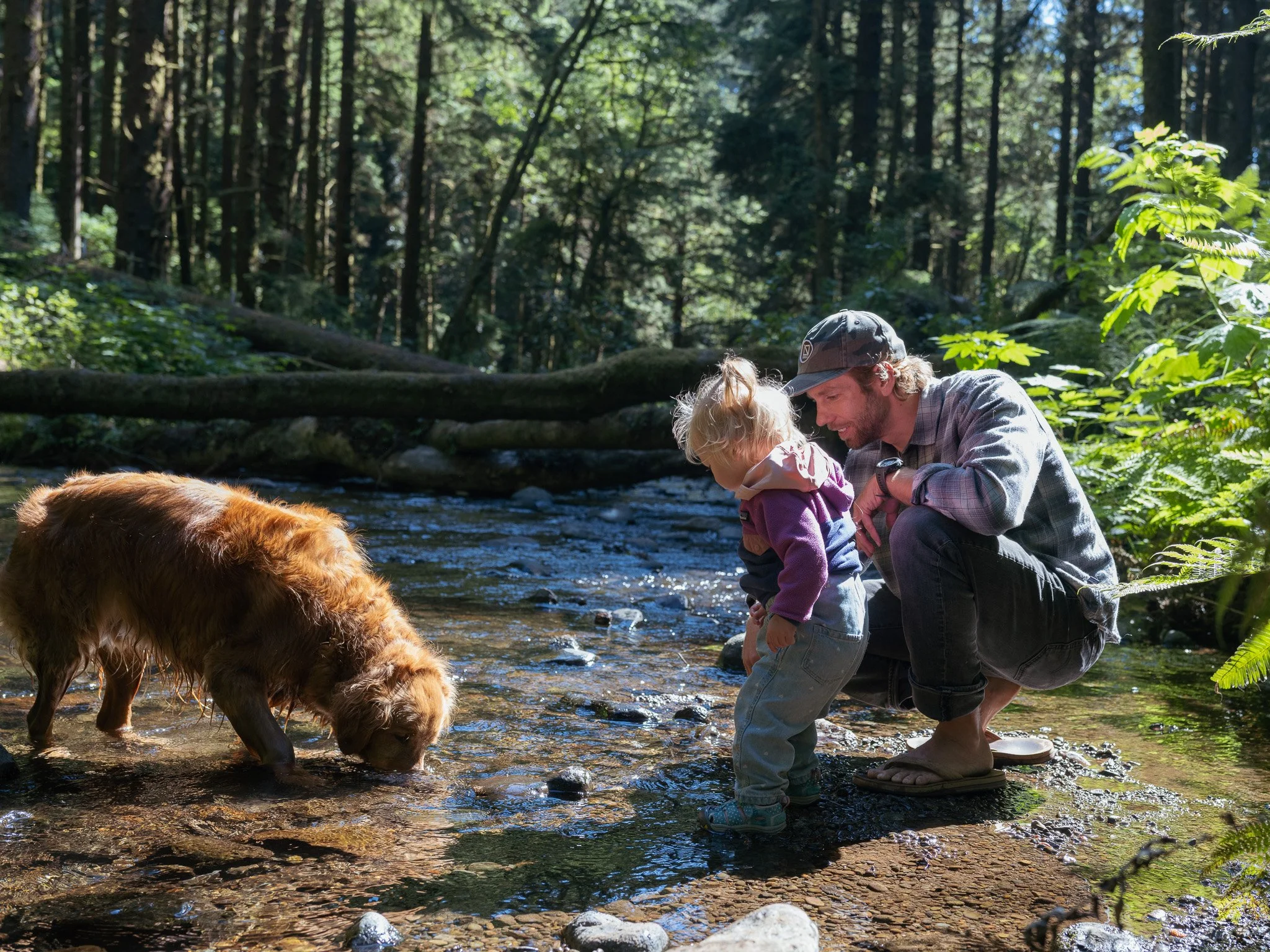
This is where I come back, again and again, to my dad.
The funny thing is, the lesson I’m learning now—the one about presence, awe, attention—wasn’t new at all. I didn’t need a decade of mountain pursuits or a string of injuries to be taught it. My dad had been teaching it to me long before I ever set foot in the Tetons.
He’s not a mountaineer or a skier. But he carries awe with a purity that’s hard to describe. Sometimes it’s a hawk circling above a field. Sometimes it’s seeing the stars explode overhead when he’s out West. He’ll turn to me with an almost childlike spark in his eyes and say:
“Isn’t this awesome?”
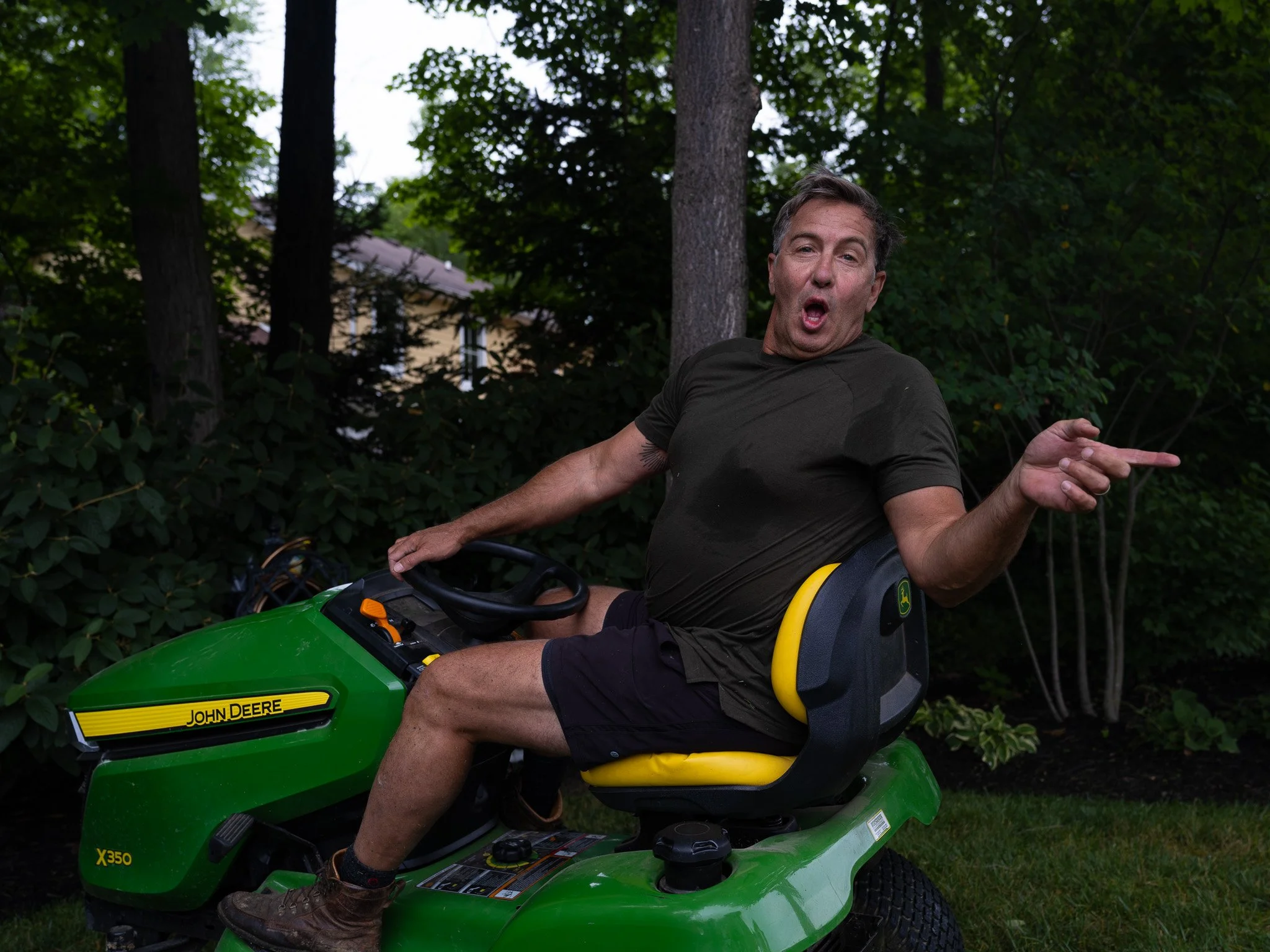
It was never about adrenaline for him.
Never about intensity.
Never about a summit.
It was about presence—being awake and astonished by the moment he was in.
That’s the lesson I want to pass to my daughters.
Not that adventure is dangerous or selfish.
Not that fatherhood requires shelving the mountains.
But that the point of all of this—the skiing, the biking, the effort, the photography— is pay attention.
If I can go into the mountains with intention, manage risk with clarity, and come home lit up—if I can bring that glow back into our living room, our bedtime stories, our pancake mornings—then adventure isn’t a betrayal of fatherhood.
It’s part of what I bring to fatherhood.
My girls don’t need the summits themselves to feel the magic.
They need the presence the summits teach me.
They need a dad who can look around—whether on a glacier or in the kitchen—and see wonder.
And if I can do that, maybe they’ll find that lesson sooner than I did.
Because the truth I’m learning, as the years of radical progression meet the years of raising small children, is this:
Adventure matters.
Presence matters more.
And the best thing I can give them isn’t my absence or my avoidance—it’s my full attention.
I don’t need to stop chasing my own trips, I need to bring that lesson home with me. Because whether it’s standing on a summit or sitting with my girls in the kitchen, what I most want them to learn is the same thing my dad showed me:
this is awesome.